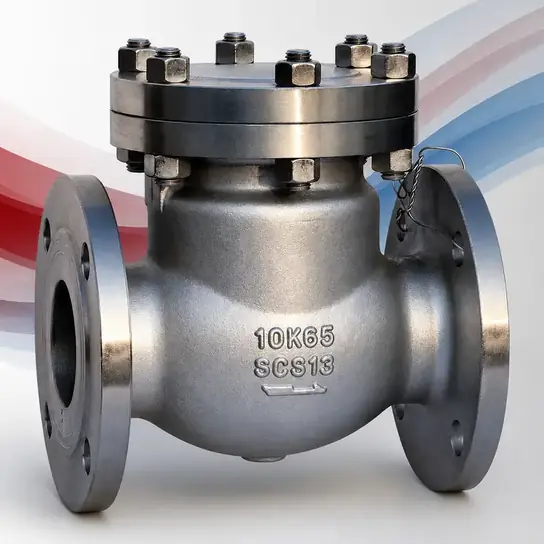
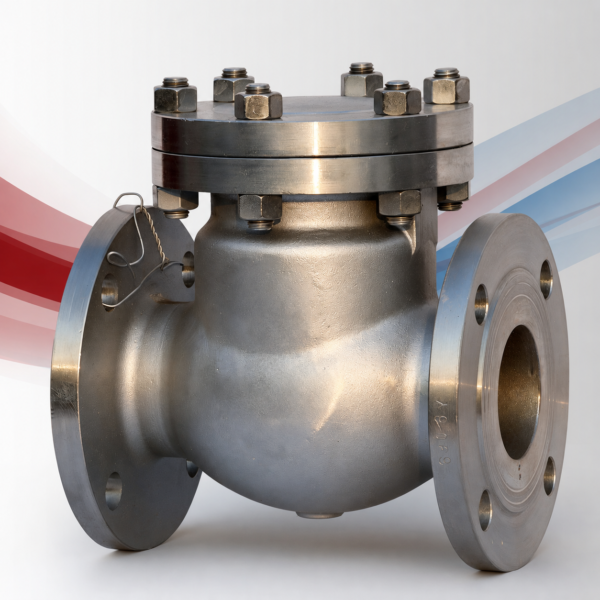
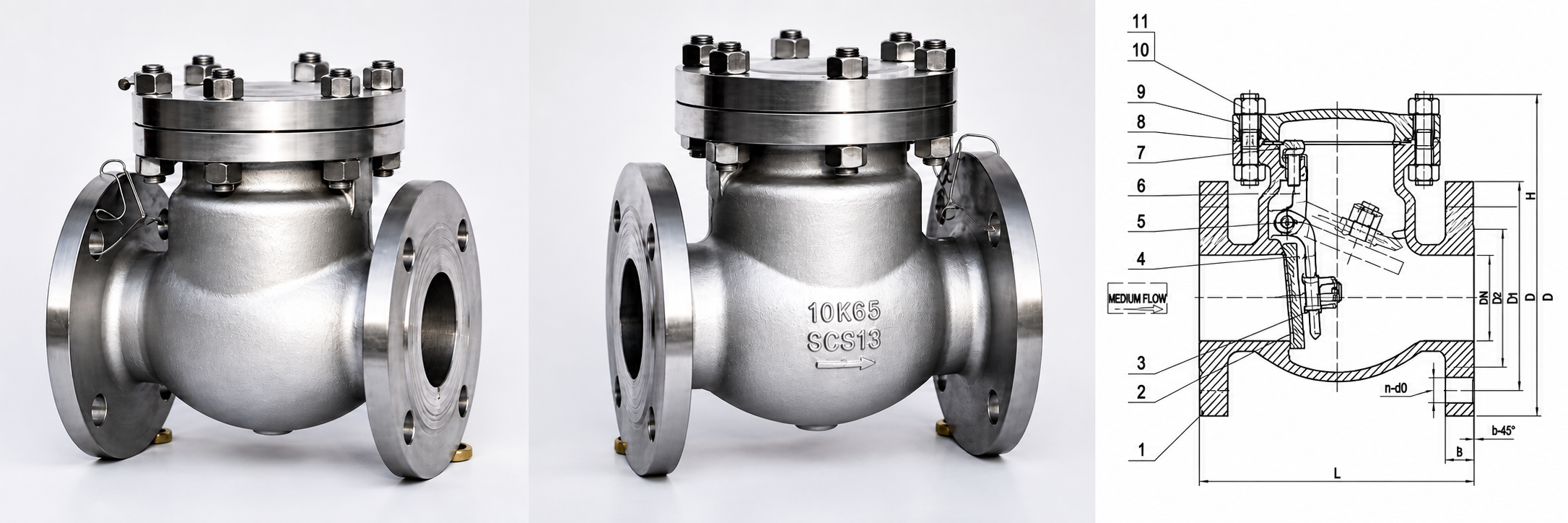
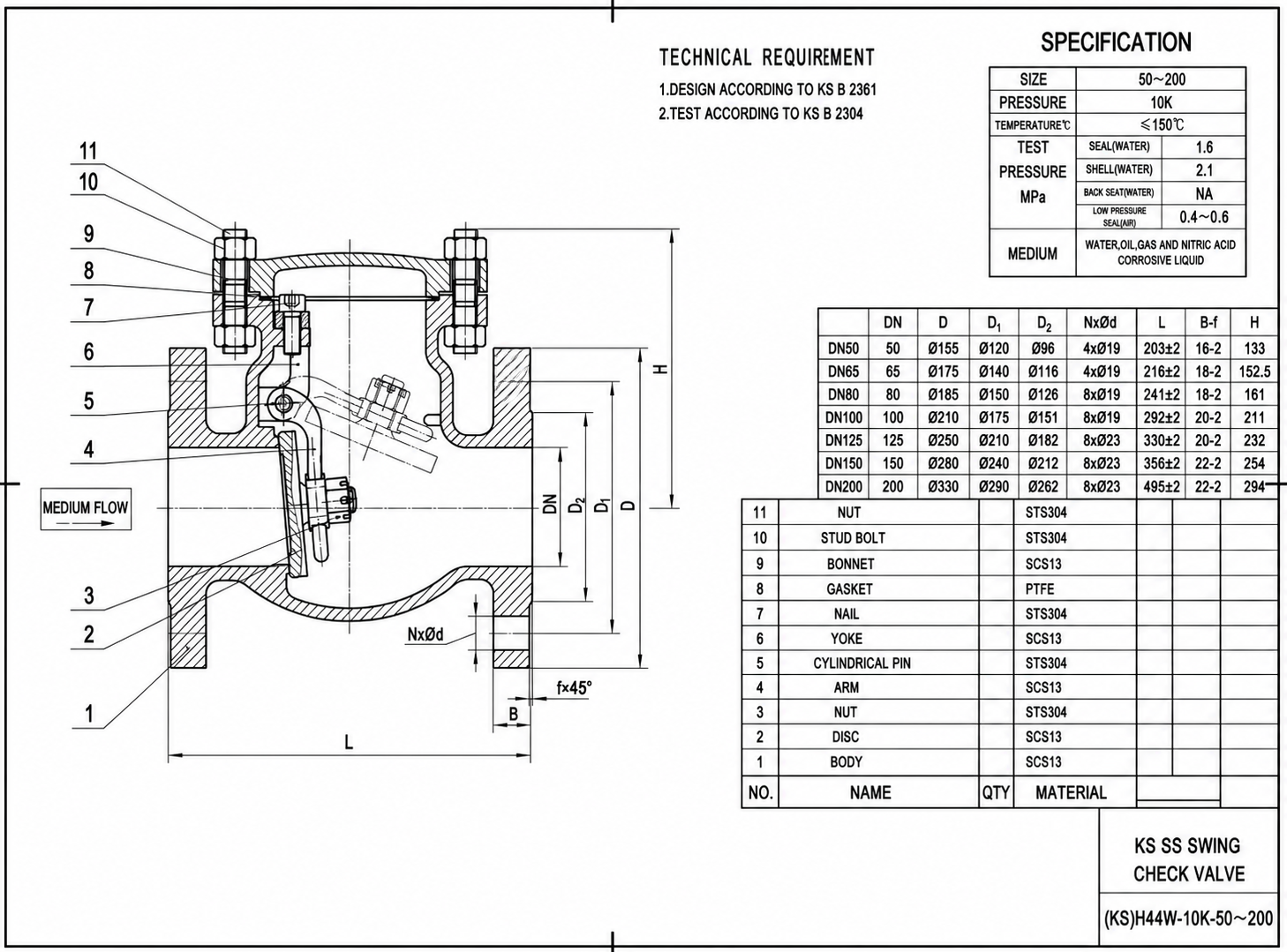
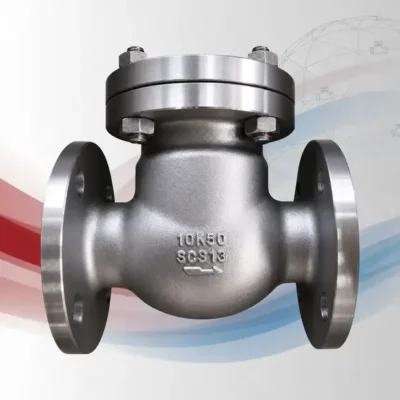
The KS Stainless Steel Middle Flange Check Valve is a reliable, automatic valve designed to prevent backflow in piping systems. Constructed from durable SCS13 stainless steel, it meets rigorous Korean Industrial Standards for safety and performance. The valve features a bolted bonnet design for easy maintenance and a swing disc mechanism that ensures efficient, unidirectional flow, making it essential for protecting pumps in corrosive environments.
Technical Specifications:
Pressure Class: 10K (Approx. 10 kgf/cm² / PN10)
Size Range: DN50 – DN200
Applicable Medium: Water, Oil, Gas, and Nitric Acid Corrosive Liquid
Operating Temperature: ≤ 150°C
Test Pressure: Shell 2.1 MPa / Seal 1.6 MPa
Main Parts & Materials:
Parts Name
Materials
Body, Bonnet
SCS13
Disc
SCS13
Pin
STS304
Gasket
PTFE
Key Product Features:
Automatic Swing Mechanism: The hinged disc opens with forward fluid pressure and closes automatically under gravity and reverse pressure to prevent backflow.
Corrosion-Resistant Construction: Made entirely from SCS13 (SS304) stainless steel, providing excellent resistance to rust and chemical corrosion for long service life.
Bolted Bonnet Design: The middle flange connection allows for secure sealing and easy access for maintenance and internal inspection.
Low Flow Resistance: The full-port swing design minimizes pressure drop and turbulence when the valve is fully open.
KS Compliance: Manufactured and tested in strict accordance with KS B 2361 and KS B 2304 standards.
Applications:
Ideal for Chemical Processing, Marine Applications, Pharmaceutical Manufacturing, and General Industrial Piping. Specifically suited for pipelines carrying nitric acid or corrosive liquids where a durable, corrosion-resistant check valve is required to protect pumps and maintain system integrity.
The valve consists of a body, cover, disc, rocker arm and other parts. The valve disc can automatically prevent fluid backflow. The disc is pushed open by the fluid pressure, allowing the fluid to flow from the inlet side to the outlet side. When the inlet pressure drops below the outlet pressure, the disc closes automatically under the pressure difference and its own weight, preventing the medium from flowing backward.